
Pharma Sales Data: The Four Streams That Power Commercial Analytics
Four data streams tell the real story of a drug’s journey, from shelf to patient to net revenue
Sanju Rajan
12/13/20255 min read

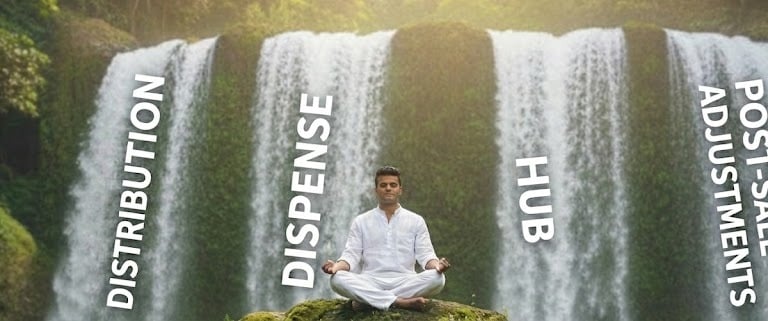
TL;DR: Pharma sales data can be divided into four streams: distribution, dispensing, access, and financial adjustments. These streams help track product movement, forecast sales, and understand net revenue. Focusing on the right data enables better, informed decisions
Pharma is flooded with data. Every prescription, shipment, approval, denial, and rebate creates another data point. But the real challenge isn’t gathering data, it’s understanding which data to use, when, and why. Too much data can obscure insights just as much as too little. You don’t need all the data, all the time.
The key to effective analytics is understanding which data matters and when to use it. Pharma sales data can be broken down into four essential streams as follows:
1. Distribution and Logistics (Product Enters the Market)
2. Dispense Data (Product Reaches the Patient)
3. Hub Services Data (Predicting Access Barriers and Early Indicators)
4. Post-Sale Adjustments (Financial Adjustments Affecting Net Revenue)
These streams represent the journey from manufacturer to patient, and each provides crucial insights to optimize sales strategies, predict outcomes, and manage operations.
Stream 1: Distribution and Logistics (Product Enters the Market)
The first stream captures the movement of product through the supply chain. Before a prescription is written or filled, manufacturers need to know how products are moving into the market and whether their distribution channels are performing effectively.
What’s in this stream?
Wholesaler Data: Tracks shipments, inventory, returns, and resales from wholesalers to retailers or hospitals.
Specialty Distributor (SD) Data: Captures purchases made by clinics and hospitals in buy-and-bill models.
3PL (Third-Party Logistics) Data: Involves the tracking and management of warehousing, inventory control, and shipping, especially for temperature-sensitive biologics.
Note about 867 Data: You will sometimes see this data category referred to as 867 data. 867 is a specific EDI (Electronic Data Interchange) transaction format that can come from wholesalers or specialty distributors, but not all wholesaler, SD, or 3PL data is 867 data. Think of 867 as a file type, while wholesaler data, SD data, and 3PL data are categories of data sources.
Sources for this stream include:
McKesson, Cardinal Health, AmerisourceBergen (for wholesaler and distributor data)
3PL providers like XPO Logistics, UPS Healthcare, and DHL for logistics data.
This stream provides a foundational understanding of how products enter the market and how much inventory is available at various stages. It’s essential for understanding market demand, ensuring supply chain reliability, and predicting stockouts. For manufacturers, this stream is vital for demand forecasting, inventory management, and logistics efficiency.
Stream 2: Dispense Data (Product Reaches the Patient)
Once the product is in the supply chain, it must be dispensed to the patient. This stream tracks actual sales and provides insight into how many prescriptions are filled and by which pharmacies. This is where the real sales data comes from, reflecting how products perform in the hands of patients.
What’s in this stream?
Retail Pharmacy Claims: Tracks new prescriptions (NRx) and total prescriptions (TRx), providing insights into the volume of prescriptions filled at retail pharmacies.
Specialty Pharmacy Data: Captures high-touch therapies, focusing on adherence, persistency, and refills for products like biologics and rare disease drugs.
Digital Pharmacy Dispenses: Includes cash-pay and digitally-enabled pharmacies, showing how products are dispensed through digital platforms.
DTC Pharmacy Fulfillment: Tracks primarily telehealth-based models where manufacturers directly manage the prescription and fulfillment process. It can also help a patient's current prescriber fulfill the prescription. Since this service is owned and operated by the manufacturer, you are unlikely to access a competitor's DTC data.
Sources for this stream include:
IQVIA (National Prescription Audit (NPA), Longitudinal Prescription Data (LRx), Xponent (Prescriber-level))
Symphony Health, Surescripts (for retail pharmacy claims)
CVS Specialty, Accredo, Walgreens Specialty (for specialty pharmacy data)
BlinkRx, Alto, Capsule, GoodRx Fulfillment (for digital pharmacy data)
LillyDirect, Ro/Roman, Hims & Hers (for DTC pharmacy models)
This is the core of pharma sales data—when a product is dispensed, it’s a real sale. Tracking this stream gives manufacturers insight into real-time sales, market share, and patient access. Understanding adherence patterns and refill rates is key for assessing long-term commercial success. As direct-to-consumer (DTC) models grow, this stream also provides insights into new sales channels and evolving patient access pathways.
Stream 3: Hub Services Data (Predicting Access Barriers and Early Indicators)
Hub services refer to patient support programs designed to help patients access medications and ensure they receive the treatment they need. Hub services are primarily about removing barriers that prevent patients from starting or continuing their therapy. They facilitate patient access by handling benefits verification, prior authorization, appeals, and enrollment. This stream doesn’t track sales directly; it’s about predicting the likelihood that a patient will start therapy. Barriers like prior authorization, benefit investigations, and patient abandonment are all signals that indicate whether a sale will happen in the future.
What’s in this stream?
Benefit Investigation (BI): Tracks if a patient’s insurance covers the therapy, including financial assistance needs.
Prior Authorization (PA): Captures the status of PA approvals or rejections.
Appeals: Shows whether a patient successfully overturns a PA denial, enabling them to proceed with treatment.
Abandonment and Non-Starts: Tracks patients who abandon their prescriptions or never start therapy after a prescription is written.
Enrollment and Onboarding: Monitors how many patients complete the process of getting enrolled in HUB services to begin therapy.
Adherence and Persistence: Yes, there is a difference.
Sources: EVERSANA, AssistRx, Lash Group, McKesson Patient Support Services, Cardinal Health Sonexus.
This stream is predictive—it helps you understand why patients are not starting therapy and when they are likely to abandon the process. It can provide early warnings about barriers to access that can ultimately affect future sales. By optimizing patient support and access programs, manufacturers can increase conversion and reduce abandonment, improving sales performance in the long term.
Stream 4: Post-Sale Adjustments (Financial Adjustments Affecting Net Revenue)
This stream tracks the financial adjustments that take place after the sale, affecting the net revenue manufacturers ultimately realize. These adjustments reflect rebates, chargebacks, and government pricing.
What’s in this stream?
PBM Rebates: Discounts paid to pharmacy benefit managers.
Medicaid Rebates: Required discounts for drugs sold under Medicaid.
Chargeback Settlement Data: Adjustments made when wholesalers sell drugs at a discounted price to eligible customers (e.g., hospitals).
Government Pricing (AMP, Best Price): Affects Medicaid pricing and 340B eligibility.
These financial adjustments shape the real revenue that manufacturers receive after discounts, rebates, and chargebacks are accounted for. While not directly related to patient behavior or sales volume, this stream is critical for understanding profitability, contract compliance, and net sales. You are less likely to use this in your commercial analytics, but it’s good to know.
Closing Thoughts:
These four streams capture key aspects of the sales process. The first two streams, distribution and dispensing, track the movement and flow of the product to the patient, while the third stream, access, helps forecast future sales potential. The fourth stream, financial adjustments, helps manufacturers understand net revenue after discounts and rebates.
The key takeaway is that the data you need depends on your goals. Understanding these four streams will help you focus on the right data, avoid information overload, and make more informed decisions.